Writing on what stories we tell, who gets to tell them, and the consequences of those choices.
Sometimes I write about football (soccer). Even then it’s often about who gets seen.
Vanity Fair · Contributing editor · Guadalajara
Vanity Fair — May 2026. In print as United Nations, June 2026 issue, pages 66–71.
Eight days at the World Cup’s Interconfederation Qualifying Tournament watching Jamaica, New Caledonia, and the Democratic Republic of the Congo contest one of the final two spots in the 2026 World Cup. On football, how empire distributed the right to be seen, and what it’s like to be the team that no one traveled to watch.
The 100th minute. A corner kick. The Congolese fans are standing because maybe standing can do something that sitting cannot. On set piece plays like this one, the DRC players speak only Lingala. No one else on the field can, and it’s a distinct advantage. All of a sudden, one way or another, the ball is in the back of the net. Tuanzebe—born in Bunia, raised in Rochdale—is sprinting toward the corner flag, fists clenched at his waist, triumphant. Behind him, Bakambu’s fists are raised as well, but he does not run. He walks. Slowly. Patiently. Toward Tuanzebe and the rest of the team that mobs him. Bakambu reaches him, lifts the younger man’s chin, and hugs him. Tuanzebe buries his head in Bakambu’s neck and pats his back repeatedly. It’s the latter’s last dance and the former’s first goal for his country, the goal that might just change everything.
The Congolese fans are dancing in their corner of the stadium now. Desabre looks like he really might cry. At the final whistle, he falls to his knees and presses his forehead to the ground. His assistant coaches lift him, swarm him, and someone trips. The growing mob crashes toward the ground again. Those still standing take turns lifting each other in the air. Bakambu kneels alone near the center circle. Both hands cover his face.
Read the whole piece at Vanity Fair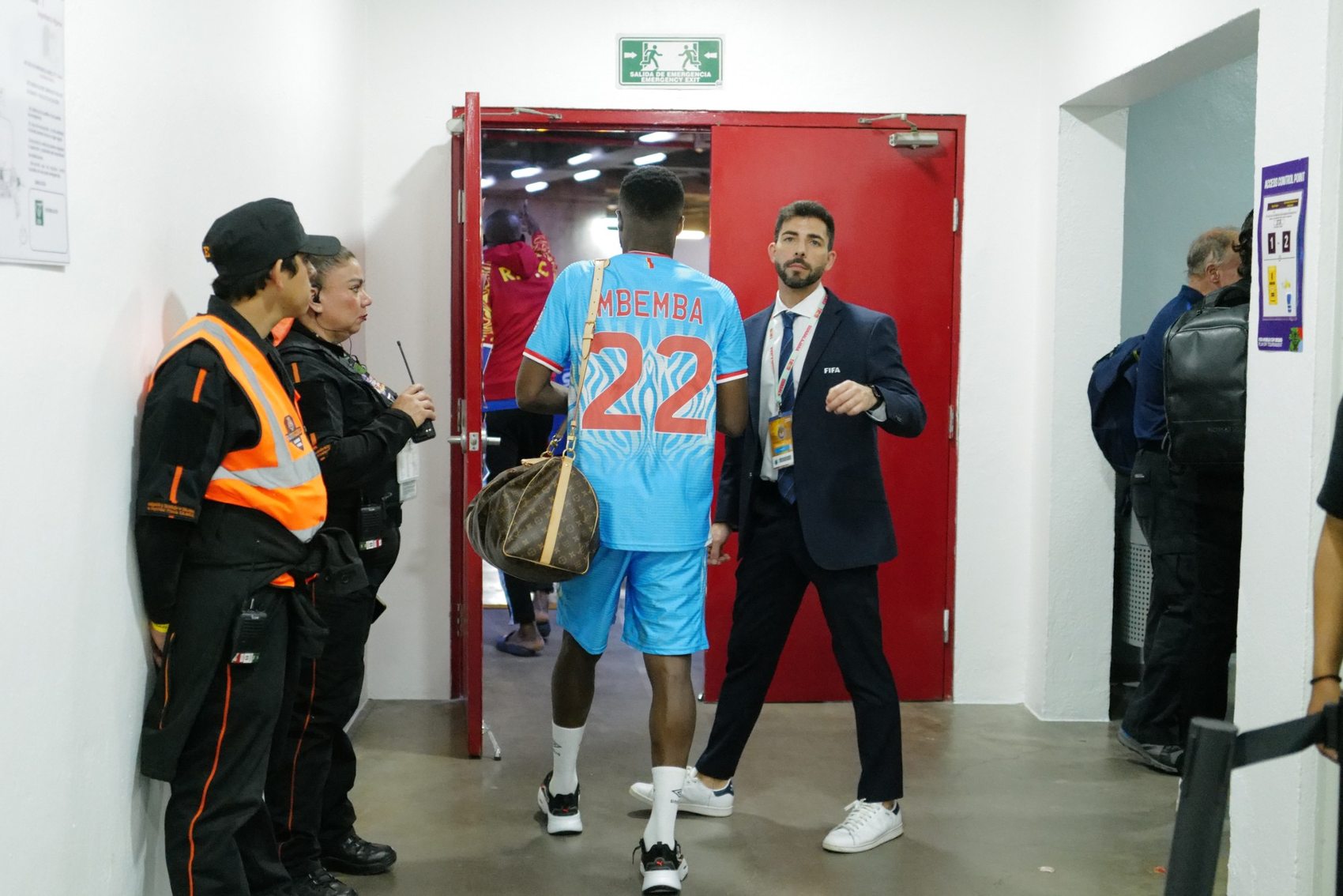
Essays
At length
On the lie that there’s a distinction between commerce and craft.
Somehow, “commercial” became an insult associated with some sort of moral failure when all it really means is what most of us want for our art more than anything: people actually watching… and then telling other people to watch.
The audience is not your enemy. The audience is the point.
And the audience isn’t obligated to care about your interiority or whatever you want to say about the world on command. They have jobs. Children. Bills. Depression. Phones. They are exhausted. They’re not sitting down on a Friday night hoping to be taught a lesson by a stranger with Final Draft.
They want you to take their attention and not give it back. They want to be a little sad when you’ve decided that you’ve reached the end of the story you wanted to tell.
Read itOn what happens when you bring numbers to an argument and get (wrongly) accused of making an accusation.
Framing a systems-level critique as a personal accusation of racism is a rhetorical sleight of hand that replaces substance with outrage. It turns an argument about policy and economics into interpersonal drama, an amusing little culture war spat, and it shuts down the conversation before it can even begin.
To be unequivocal: I did not accuse anyone of racism. I questioned a pattern of decision making that defies the evidence. I asked why, in an industry ostensibly driven by profit, we continue to ignore profitable opportunities.
Read itSelected opinion
Shorter arguments
On an industry that leaves ten billion dollars a year on the table, according to McKinsey & Company, and what that says about the competence of the people running it.
Published as “A Wholly Serious and Non-Exhaustive List of 74 Things Hollywood Needs to Ensure a Viable Future”
Written during the 2023 WGA strike, on what we might do to build a viable future in Hollywood.
On what the nominations could have looked like, if the world were not the way that it is.
On what the most photographed American of the nineteenth century can teach us about the motion picture industry in the twenty-first.
Get the next one
I publish irregularly. When there is something new, subscribers get it first.